Ark of War: Aim for the cosmos
- 4.1
- Rating
- 5.00M
- Installs
- Free
- Price

 Analysis by App-foxy
Space strategy games often make a strong first impression: a large map, a growing base, distant enemies and the promise that one clever decision can change everything. I approached Ark of War with that expectation, but what stayed with me was not simply its science-fiction setting. The real question is whether its planning remains interesting after the opening excitement fades. My answer is qualified but positive: it can earn a regular place on your phone if you enjoy patient progression, alliance activity and making decisions around limited time. It is much less convincing if you want quick matches, a clean single-player campaign or strategy that depends only on moment-to-moment skill.
Developed by SevenPirates, this free strategy game puts its action in a space-based setting where growth, preparation and timing matter more than reflexes. It is rated Everyone 10+, runs on Android 6.0 or later, and the current version is 4.43.0. Those details make it accessible to a broad range of devices, although the experience itself is aimed more at players comfortable with ongoing management than at children looking for a simple space adventure.
What keeps the first week interesting
My first week with Ark of War was driven by a familiar but effective loop: check what is developing, decide what deserves attention next, improve the position, and return later to see how the plan worked. That rhythm is easy to understand without feeling completely empty. The space theme gives ordinary management decisions a clearer purpose, because upgrades and expansion feel connected to survival and influence rather than being isolated menu tasks.
You May Also Like

 Blood Strike: 2.5 Anniversary
Blood Strike’s Loadouts Turn Every Drop Into a Tactical Gamble
A close look at Blood Strike’s custom loadouts: how fast access to signature weapons reshapes its battle royale rhythm, rewards preparation, and narrows the gap between fights.

 Pandora - Music & Podcasts
Pandora’s Music Is Easy to Start, but Harder to Recover
Pandora’s strength is its low-effort path from a seed to a station. Its weak spot is how much confidence it asks you to place in connection, setup, and quiet recovery.

 8 Ball Pool
 Is Built on Rivalries, Rematches, and Routine
A close look at the rivalries, rematches, shared routines, and unanswered safety questions that turn a quick pool match into a persistent mobile community.

 Samsung Music
’s Quiet Strength Is Playing What You Already Own
Its reach comes less from spectacle than from dependable access to a personal library. That simplicity is both the app’s strongest retention engine and its ceiling.

 AccuWeather: Weather Radar
AccuWeather Review: A Quick, Clear Forecast for Everyday Decisions
For everyday plans, the best forecast is the one you can understand quickly. AccuWeather makes rain timing, radar, and local conditions easy to act on, with a few trade-offs.

 Hill Climb Racing
Why Hill Climb Racing Still Turns Crashes Into One More Run
A tiny car, a bumpy hill and one more upgrade: Hill Climb Racing keeps resurfacing because its simple chaos makes every near-miss feel personal.
More From Our News Desk



The opening is especially appealing for players who like visible progress. Early improvements tend to feel meaningful because the starting position is limited and every new capability changes what seems possible. I found myself thinking ahead more than I expected. Should I strengthen the foundation first, push toward a more ambitious goal, or save resources for a later opportunity? Even when the individual action was simple, the order of actions created the strategic interest.
That is also where the game’s main appeal becomes clear. It is not trying to be a short board-game session translated to a phone. It is built around a continuing space operation. You are expected to return, observe developments and adjust your priorities. If you enjoy games that quietly occupy your thoughts while you are away from the screen, this structure works well. If you prefer a complete tactical challenge that begins and ends in one sitting, the design may feel slow almost immediately.
I would not describe the early experience as difficult to understand, but it does ask you to pay attention to several layers at once. New players can easily focus on the most obvious improvement and overlook the value of preparation. My practical advice is to avoid spending everything simply because an upgrade is available. Keep a reserve for the next decision, especially when you are unsure whether your current goal is development, defense or cooperation with other players.
That small habit made a real difference for me. Instead of treating every available action as equally urgent, I started grouping tasks into short sessions. During a morning break, I would review what had completed and queue the next useful step. Later, I could make a larger decision with a clearer picture of my position. This approach makes the game feel less like a list of chores and more like a plan that unfolds over time.
The first week also reveals whether you enjoy the social side of the design. Space strategy becomes more engaging when your decisions exist in relation to other players, but that can create pressure as well. A player who wants complete control over pace and direction may find the broader environment distracting. Someone who enjoys coordination, shared goals and watching a larger situation develop will probably find more reasons to return.
One useful way to approach the opening is to decide what kind of player you want to be before trying to do everything. You can focus on steady development, prepare for confrontation, or give more attention to cooperative progress. Trying to maximize every direction at once is less satisfying than choosing a priority and accepting the trade-offs. That is not a flaw unique to this game, but here it is important because the ongoing structure rewards consistency more than random bursts of activity.
The strategy is mostly about timing
The strongest early decisions are rarely dramatic. They are about timing an improvement so that it supports the next several actions, rather than solving only the problem directly in front of you. I enjoyed that layer because it gives modest choices a longer shadow. A decision that looks efficient now may leave you poorly prepared later, while a slower choice can create a better foundation.
This makes the game more suitable for thoughtful players than for people who equate strategy with constant action. There are moments when waiting is the correct move, and that can be hard to appreciate if you are used to games that reward immediate input. I found the best sessions were not the ones where I tapped the most. They were the ones where I entered with a clear purpose and left after setting up the next useful stage.
Why the second month matters more than the first
The novelty of a space setting can carry a game for several days, but it cannot carry it indefinitely. After the opening, the important question becomes whether the routine still produces decisions rather than merely demanding attendance. In my experience, Ark of War has recurring value when I treat it as a planning habit. It works less well when I expect every visit to deliver a major event.
Month-to-month enjoyment depends heavily on personal goals. Players who like gradual improvement can find satisfaction in maintaining a direction and watching the broader position develop. The game gives those players a reason to keep refining priorities instead of starting over each time. I also appreciated that a short visit could still feel useful. I did not always need a long uninterrupted session to make progress, which suits a phone game used around work, travel or household routines.
A realistic example is a weekday when I have only a few minutes before leaving home. I can check the current state, make sure the next action supports my chosen priority and leave the game running toward that goal. In the evening, I can reassess rather than blindly repeat the same routine. That simple pattern is where the game earns its place for me: it fits between other activities without requiring every session to become an event.
The trade-off is that this convenience can make the experience feel repetitive. When the next decision is obvious, checking in becomes maintenance rather than strategy. The game is at its best when a new objective, a changing situation or a social commitment forces me to reconsider the plan. Without that pressure, the same loop can become background noise.
Players often wonder whether the game can be enjoyed without spending money. Since it is free to play and offers in-app purchases ranging from $0.99 to $99.99 per item, the sensible approach is to begin without buying anything and judge how the pacing feels. I found that this also reveals whether the core routine is enjoyable on its own. If you already feel bored or pressured before considering a purchase, spending will not fix the underlying problem. If you enjoy the planning and simply want to support faster progress, the decision becomes more personal, but it should remain a choice rather than the reason to continue.
That distinction matters over a month. A purchase may reduce waiting or make progress feel smoother, yet convenience can also remove the small planning challenge that gives the game its identity. I prefer to preserve some friction because it makes priorities meaningful. Players who dislike waiting altogether may be happier with a premium strategy game that sells a complete experience upfront, even if it offers fewer long-term systems.
Where recurring value comes from
The recurring value is not just in unlocking something new. It comes from revisiting an existing plan and deciding whether it still makes sense. That is a subtle strength. Many mobile strategy games encourage constant expansion without asking whether the expansion serves a coherent objective. Here, I got more enjoyment by treating progress as a series of connected choices rather than a race to collect every improvement.
Another useful habit is to review your recent decisions before making the next one. If an earlier choice was made only because it was available, ask what it actually enabled. This prevents the common mobile-game trap of confusing activity with progress. I also recommend setting a stopping point for each session. Returning repeatedly without a purpose can turn a game you enjoy into an obligation, especially when the long-term structure already encourages frequent attention.
The game has attracted a substantial audience, with over five million installs, an average rating of 4.1 and around two hundred twenty-two thousand ratings. That level of activity suggests that the ongoing format has found a durable audience, although popularity should not be mistaken for a guarantee that its tempo will suit you. The same systems that keep committed players involved can feel demanding to someone who wants a quieter, more self-contained experience.
The maintenance burden behind the strategy
Every persistent strategy game asks for some upkeep, and this one is no exception. The burden is not necessarily the number of actions in a single session. It is the mental cost of remembering what you were trying to accomplish, checking whether circumstances changed and deciding what deserves attention now. That cost is manageable when the game is part of a routine, but it becomes tiring when you return after a long break and need to reconstruct your position.
I found that a simple priority system helped. I would keep one main objective, one supporting objective and a reserve plan for when the preferred action was unavailable. This reduced aimless menu browsing and made short sessions more productive. It also exposed a genuine limitation: players who want to play entirely on impulse may feel that the game rewards organization more than spontaneity.
The maintenance burden increases when social expectations enter the picture. Cooperation can make a large space strategy game feel alive, but it can also make absence feel costly. If you do not want a game that may compete with your schedule, choose your level of involvement carefully. A casual approach is more sustainable than promising constant participation and then resenting the obligation.
Device compatibility is reasonably broad because the minimum Android requirement is 6.0, but that does not tell you how enjoyable it will be on every phone. On an older device, I would pay attention to responsiveness and battery comfort during longer sessions rather than assuming that the minimum operating system guarantees an identical experience. The game is better suited to a phone you can check comfortably throughout the day than to a device used only for occasional offline play.
Another maintenance issue is attention fragmentation. Because the game is designed around return visits, it can encourage you to think about the next action while doing something else. I recommend turning that into a deliberate schedule instead of reacting to every possible prompt. The best long-term relationship with this type of game is controlled access: visit when you have a reason, make the important decisions, and leave.
Who should skip it
I would skip this game if your ideal strategy experience is a self-contained campaign with handcrafted levels and a clear ending. You may also prefer another option if you want rapid battles where every outcome is decided in a few minutes. The continuing structure here is a feature only when you enjoy gradual development and the responsibility of keeping a plan alive.
It is also not the best fit for players who dislike in-app purchase pressure in free games. Even when you choose not to spend, the presence of optional purchases can influence how you interpret pacing. If that relationship makes you suspicious of every delay, a paid strategy title may provide a more comfortable experience.
On the other hand, I would recommend giving it a fair trial if you like checking a game during small gaps in the day, thinking several steps ahead and watching a persistent setting change over time. It is particularly suitable for someone who wants strategy that can be revisited in short sessions without requiring a full evening. The key is accepting that its satisfaction comes from continuity, not constant spectacle.
What creates fatigue after the novelty fades
The largest source of fatigue is repetition without a meaningful change in priorities. A routine can be relaxing for a while, but if every visit asks for the same kind of attention, the space theme stops doing much work. I noticed this most when I returned simply because I felt I should, not because I had a decision I wanted to make.
There is also a tension between convenience and involvement. Short sessions make the game easy to fit into daily life, but they can reduce each visit to administration. Longer sessions offer more room to think, yet they can expose the slower pacing. This is why I would not judge the game from one enthusiastic evening. The real test is whether you still enjoy choosing priorities after several weeks of ordinary play.
The social dimension can produce a different kind of fatigue. Cooperation adds context and can make progress feel shared, but it may also make the game less relaxing for players who prefer private play. I would approach any group commitment cautiously and choose expectations that match your actual schedule. A strategy game should support your routine, not dictate it.
Finally, free-to-play progression can create uncertainty about the ideal pace. A player who wants to move quickly may feel tempted by purchases, while a patient player may regard the same pacing as part of the challenge. Neither response is wrong, but it means the game will not feel equally fair or enjoyable to everyone. My own preference is to use purchases only when I already value the game’s ordinary loop, never as a test of whether the loop is worth keeping.
My long-term verdict on Ark of War
Ark of War earns lasting space on my phone conditionally. Its strongest quality is the way it turns small, repeated decisions into a longer strategic project. I like that it can fit into a morning check-in, an evening review or a more deliberate planning session. The space setting gives those choices a recognizable identity, while the ongoing format gives patient players a reason to return.
Its weaknesses are closely tied to the same design. The game can become maintenance-heavy, social expectations may add pressure, and repetition is difficult to ignore once the initial discovery period ends. Players looking for fast, decisive matches or a complete premium campaign should look elsewhere. A more compact strategy game will be better when you want every session to have a clear beginning and conclusion.
For me, the deciding factor is habit. I enjoy it when I set a purpose before opening it and accept that progress will be gradual. I enjoy it much less when I treat every possible action as urgent. That makes my recommendation straightforward: try the free version, play patiently through the early excitement, and judge the routine rather than the theme alone. If the act of planning your next return still feels satisfying after the novelty has faded, this is a durable space strategy game. If checking in starts to feel like another task on your list, its long-term design is probably working against the way you want to play.
With its 2016 release and current 4.43.0 version, the game has had time to establish a continuing identity rather than feeling like a brief experiment. I would not call it universally compelling, but I do think it has a clear audience. For players who enjoy persistent progression, measured decisions and a space setting that rewards consistency, SevenPirates’ game can become a dependable daily strategy habit. For everyone else, the same persistence may be exactly what makes it easier to leave behind.
FAQs for Ark of War: Aim for the cosmos
01What is Ark of War: Aim for the Cosmos?
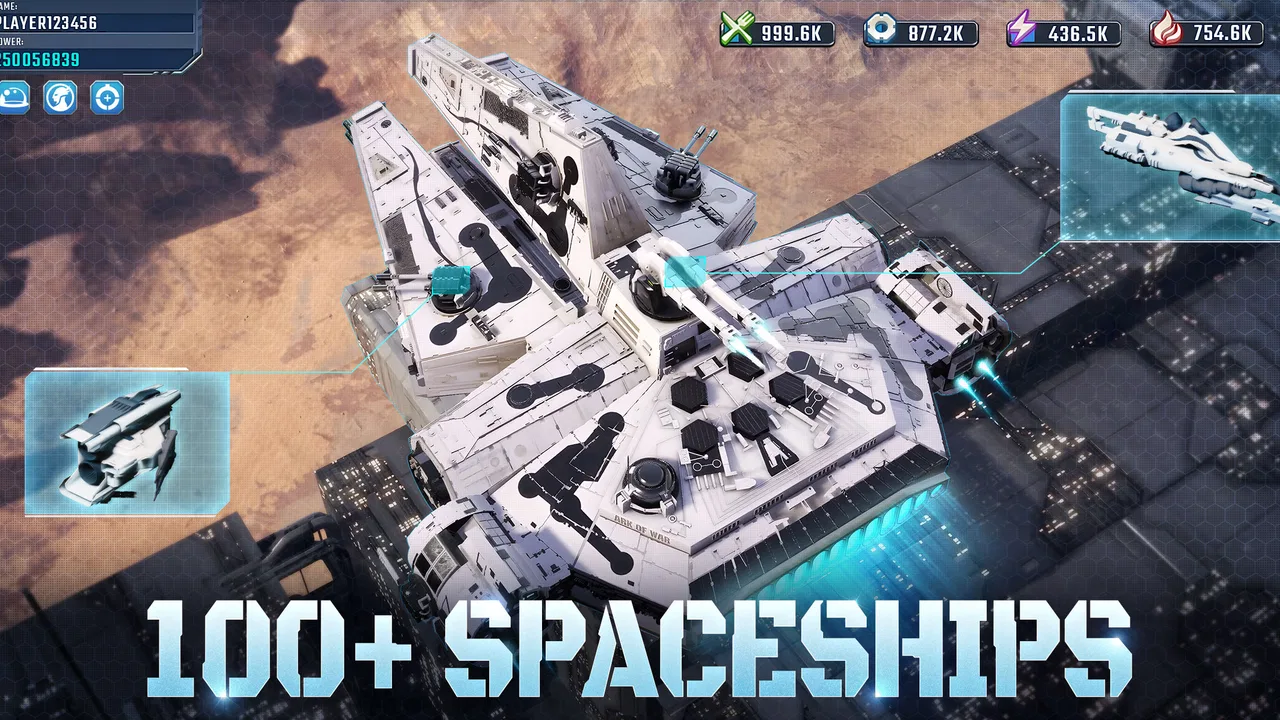
Ark of War: Aim for the Cosmos is a science-fiction strategy game in which you command a massive space ark, develop its facilities, recruit and upgrade heroes, and compete for control of the galaxy. The game combines base building, resource management, fleet development, exploration, and real-time or asynchronous player-versus-player activities. Progress depends on planning upgrades, choosing effective commanders, and participating regularly in events.
02Is Ark of War: Aim for the Cosmos free to download and play?
Yes, Ark of War: Aim for the Cosmos can generally be downloaded and played for free on supported Android and iOS devices. However, it includes optional in-app purchases for resources, speed-ups, premium currency, progression bundles, and other advantages. You can make progress without spending money, but free players may need more patience, especially when construction timers become longer and competition with high-spending players increases.
03Does the game require an internet connection?
Yes, an active internet connection is normally required because Ark of War: Aim for the Cosmos is an online multiplayer strategy game. Your progress, alliance activities, events, rankings, battles, and server interactions depend on communication with the game’s servers. Wi-Fi is recommended for longer sessions, although mobile data can work. Playing offline is not a practical option, and unstable connectivity may interrupt battles or loading.
04Is Ark of War: Aim for the Cosmos suitable for beginners?
The game is accessible to beginners, but its many systems can feel complicated during the first hours. New players must learn how to upgrade the ark, manage resources, research technologies, improve heroes, build fleets, and join an alliance. The early tutorial provides a useful introduction, while joining an active alliance is especially helpful because experienced members can provide advice, assistance, and protection during development.
05Does Ark of War: Aim for the Cosmos contain multiplayer battles and alliances?
Yes, multiplayer interaction is one of the game’s main features. Players can join alliances, cooperate during events, exchange assistance, compete on rankings, attack targets, and participate in larger conflicts over territory or resources. Alliance membership can significantly improve progression, but it also introduces competitive pressure and requires regular activity. Players who prefer a completely solo experience may find the persistent online environment demanding.
Pros
- Large-scale space battles with strategic fleet and base management.
- Multiple civilizations and commanders offer varied playstyles.
- Alliance features make cooperation and territory control engaging.
- Regular events provide extra goals beyond the main campaign.
- Playable on mobile with an interface suited to short sessions.
Cons
- Progress can feel slow without frequent upgrades and resource planning.
- Heavy spenders may gain a noticeable advantage in competitive modes.
- The interface can feel crowded for new players at first.
- Timers and resource shortages encourage repeated daily check-ins.
- Alliance activity is important
- limiting the experience for solo players.

Ark of War: Aim for the cosmos
Gallery